
Kenya’s transition to cleaner mobility has often been framed as a technology problem. In reality, it has been a financing problem.
Electric and hybrid vehicles are no longer unfamiliar in the market. What has held adoption back is access, the upfront cost, limited financing options, and uncertainty around long-term value. SBM Bank Kenya’s newly announced KES 1 billion Green Finance Facility is a direct attempt to solve that constraint.
The facility, set to run over the next 12 months, is designed to make electric vehicles (EVs) and plug-in hybrid electric vehicles (PHEVs) more accessible to both individuals and businesses.
Because for Kenya’s green mobility ambitions to move beyond pilot projects and early adopters, the ecosystem needs more than vehicles, it needs financing models that work at scale.
Kenya has set a target to reduce carbon emissions by 32% by 2030. Transport remains one of the more difficult sectors to decarbonize, largely due to cost and infrastructure challenges.
What SBM Bank is doing here is aligning capital with that national goal.
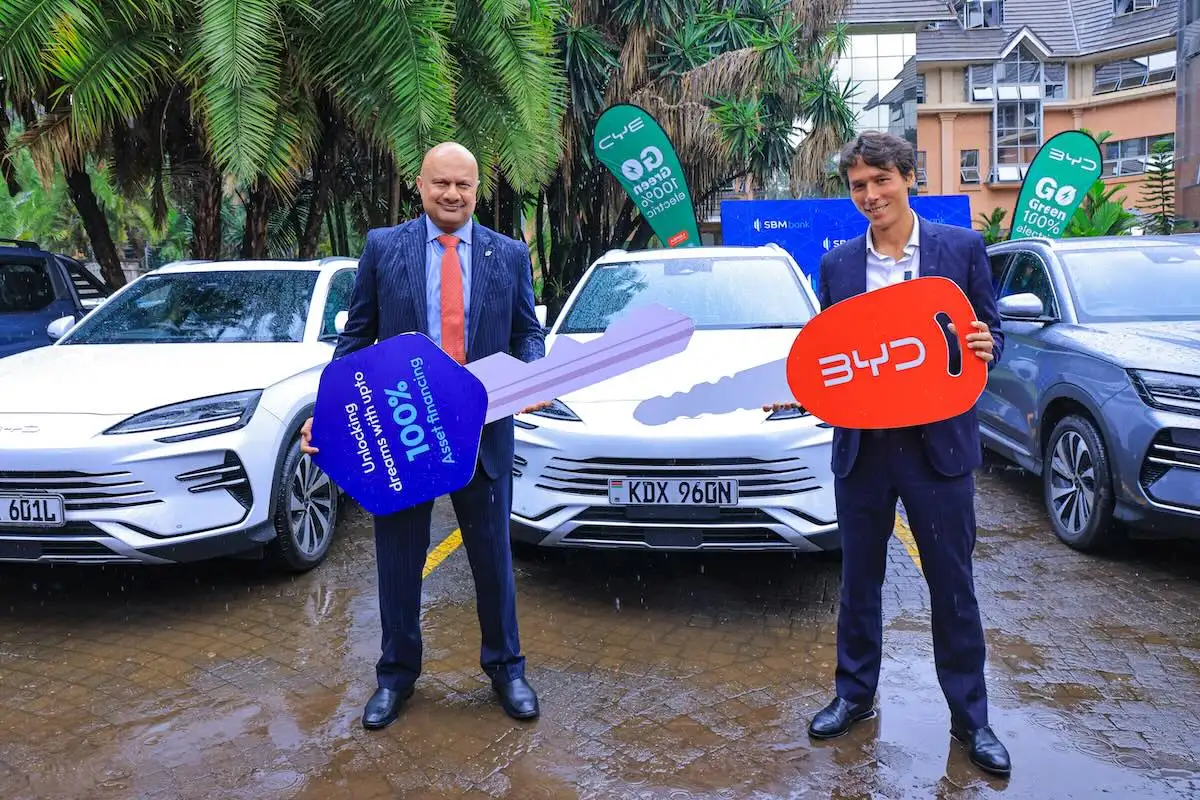
“This is about catalyzing a broader shift,” said CEO Bhartesh Shah during the unveiling of the bank’s new fleet. “Our role is to ensure that sustainable mobility becomes accessible, not just for corporates, but for entrepreneurs and everyday consumers.”
The bank is also taking a practical step inward. Through a leasing partnership with CFAO Mobility Kenya, SBM Bank has invested KES 45 million into its own fleet, acquiring five BYD vehicles, including models such as the Shark 6 and Sealion 6. It’s a relatively small fleet, but symbolically important.
By integrating EVs into its own operations, SBM is testing the same transition it is now financing. It’s also sending a signal to other institutions: the shift is no longer theoretical.
One of the more notable aspects of this initiative is its broader ambition.
According to CFAO Mobility Kenya, the collaboration is expected to go beyond vehicle financing. It will support infrastructure and services including charging solutions, fleet management and lifecycle optimization.
Because the success of electric mobility in Kenya will depend less on individual transactions and more on whether a functioning ecosystem can emerge around them. Financing can unlock demand, but sustained adoption requires coordination across multiple layers, energy, logistics, servicing, and data.
SBM’s facility doesn’t solve all of that. But it does create the conditions for it to begin scaling.
The announcement comes at a moment when SBM Bank is in a stronger financial position. The bank recently reported a Profit Before Tax of KES 614 million, alongside a 55% increase in total operating income.
Also Read: BasiGo Expands Electric Bus Charging Network with New Athi River Site